Choosing a frying pan should be simple — but when you see terms like ceramic, PTFE, PFOA-free, and hard-anodized, it quickly gets confusing. Most cooks ask one basic question:
“Which is better — ceramic or nonstick frying pans?”
In this comprehensive buyer’s guide, we’ll compare ceramic vs nonstick frying pans side-by-side — looking at materials, performance, safety, durability, price, and everyday use. We’ll also highlight top options on Amazon so you can make a confident kitchen upgrade.
By the end of this guide, you’ll know:
-
How ceramic and traditional nonstick coatings differ
-
What pan is right for your cooking style
-
How to care for each type
-
Which models perform best in 2026
Let’s get started.
🧠 Ceramic vs Nonstick: The Quick Summary
| Feature | Ceramic Frying Pans | Traditional Nonstick Frying Pans |
|---|---|---|
| Coating Type | Ceramic (PFAS-free) | PTFE/PTFE-based coatings |
| Release Quality | Good | Excellent |
| High-Heat Cooking | Better | Moderate |
| Longevity | Moderate | High (if cared for) |
| Safety Perception | Perceived as safer | Safe below high temps |
| Maintenance | Easy | Very easy |
| Best For | Low-to-medium heat cooking | Everyday frying & sticky foods |
🔍 What Is Ceramic Coating?
Ceramic coatings are made from silica-based materials — essentially baked sand — applied to the surface of a frying pan.
Key characteristics:
-
PFAS-free (no PTFE, PFOA, lead, or cadmium)
-
Usually golden or light-colored surface
-
Good heat tolerance
-
Naturally slick when new
Many brands now emphasize ceramic as a health-conscious alternative to older nonstick coatings.
🔎 What Is Traditional Nonstick?
Traditional nonstick (PTFE) — often referred to as Teflon — uses a polymer coating bonded to the pan’s surface.
Attributes:
-
Extremely slick surface
-
Requires less fat for release
-
Suited for everyday frying
-
Best performance at low-to-medium heat
Modern nonstick coatings are safer than early generations — but ceramic still attracts buyers who want no chemicals at all.
🍳 Ceramic vs Nonstick: Performance Breakdown
Let’s compare how these two styles stack up in real-world cooking.
✅ 1. Release Quality (How Nonstick?)
✦ Nonstick Pans
Traditional nonstick pans are the king of release:
✔ Eggs slide
✔ Pancakes flip easily
✔ Fish fillets don’t stick
PTFE coatings are engineered to reduce food adhesion dramatically — often more effective than ceramic.
✦ Ceramic Pans
Ceramic coatings are good, especially when new — but:
✘ Less slippery than PTFE
✘ Require slightly more oil
Ceramic is best for sautéing vegetables and moderate stickiness foods, but tough releases like eggs or crepes perform better on traditional nonstick.
Winner: Traditional Nonstick
⚡🔥 2. Heat Tolerance & Cooking Style
✦ Ceramic Pans
Ceramic generally handles higher heats better, which means:
✔ Better for searing and browning
✔ Stronger at medium-high temperatures
However, at very high heat, many ceramic coatings degrade faster.
✦ Traditional Nonstick
Traditional nonstick performs best at:
✔ Low to medium heat
At high heat (above ~500°F), PTFE can begin to break down — not dangerous in normal cooking, but affects performance.
Winner: Ceramic for high heat, Nonstick for everyday lower-heat cooking.
🧼 3. Durability: Which Lasts Longer?
This depends heavily on care, but in most real kitchens:
✦ Nonstick Pans
✔ Typically longer lasting
✔ Better at resisting scratches (with correct use)
✔ More forgiving on maintenance
✦ Ceramic Pans
✘ Can lose slickness faster
✘ Abrasion or thermal cycling can wear down coating
If you cook frequently, a high-quality PTFE pan will usually outlast ceramic.
Winner: Traditional Nonstick
🧪 4. Safety: Health Perceptions & Reality
✦ Ceramic Frying Pans
Ceramic coatings are PFAS-free, which appeals to buyers who:
-
Avoid synthetic chemicals
-
Prefer natural coating materials
There’s no debate — ceramic is free of PTFE and PFOA.
✦ Traditional Nonstick
Modern PTFE coatings are safe when used correctly — that means:
✔ Avoid high heat
✔ Don’t preheat an empty pan
✔ Use silicone or wood utensils
So while both are safe, ceramic may appeal to health-first cooks.
Winner: Ceramic on perception; both are safe in normal use.
💸 5. Price & Value
Generally:
-
Ceramic pans trend slightly more expensive at mid-range levels
-
Traditional nonstick pans come in a wide range of prices — from budget to premium
Value often comes down to how long the pan lasts and how well it performs.
Winner: Traditional nonstick for budget diversity.
🏆 Best Ceramic Frying Pans (2026 Favorites on Amazon)
Here are the best ceramic frying pans you can buy on Amazon, based on performance, customer reviews, and long-term value.
🥇 GreenPan Valencia Pro Ceramic Fry Pan
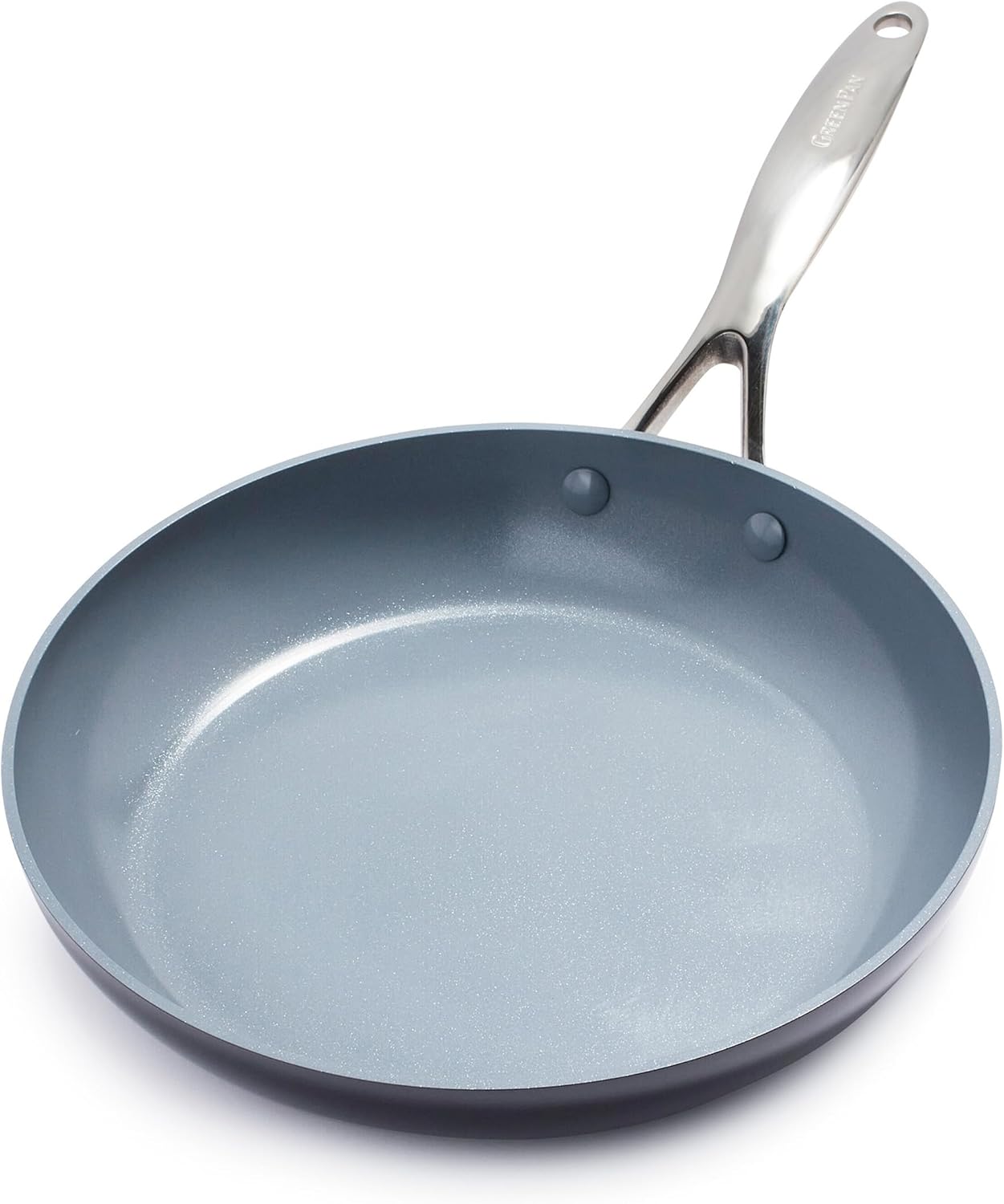
Best Overall Ceramic Frying Pan
GreenPan’s Valencia Pro line is one of the most respected ceramic pans available.
Key Features
-
Thermolon™ ceramic nonstick
-
Hard-anodized body
-
Induction-ready
-
Oven safe up to 600°F
Why It’s Great
Ceramic often loses slickness over time — but this model stays resilient through frequent use. It’s easy to clean, handles heat well, and looks great in the kitchen.
Pros
✔ PFAS-free
✔ Excellent heat distribution
✔ Induction compatible
Cons
✘ Slightly heavier
✘ Slickness declines after heavy use
Best For: Everyday ceramic cooking and moderate high-heat searing.
🥈 GreenLife Soft Grip Ceramic Nonstick Fry Pan

Best Value Ceramic Pan
If you want ceramic performance on a budget, this is a standout choice.
Key Features
-
Thermolon ceramic coating
-
Lightweight aluminum base
-
Soft grip ergonomic handle
-
Multiple vibrant color options
Pros
✔ Affordable PFAS-free pan
✔ Easy to handle
✔ Dishwasher safe
Cons
✘ Surface loses slickness faster
✘ Better for medium heat
Best For: Budget-friendly ceramic choice.
🍳 Caraway Ceramic Fry Pan

Premium Ceramic with Style
Caraway’s ceramic pans are known for aesthetics and performance — ideal if you want kitchen cookware that looks as good as it cooks.
Key Features
-
Sleek modern design
-
Oven safe up to 550°F
-
Magnetic base for induction
Pros
✔ Exceptional build quality
✔ Healthy ceramic coating
✔ Great for everyday frying
Cons
✘ More expensive than average ceramic
Best For: Aesthetic and premium ceramic experience.
🍳 Best Traditional Nonstick Frying Pans (2026 Picks)
Now let’s look at top nonstick pans that deliver easy release and durability.
🥇 T-fal Ultimate Hard Anodized Nonstick Fry Pan

Best Overall Traditional Nonstick
T-fal is a top choice for anyone who wants a performing traditional nonstick without paying premium prices.
Key Features
-
Hard-anodized aluminum
-
Durable nonstick interior
-
Thermo-Spot heat indicator
-
Oven safe up to 400°F
Pros
✔ Exceptional release
✔ Affordable
✔ Fast and even heating
Cons
✘ Best performance at low-medium heat
✘ Not induction compatible in some sizes
Best For: Everyday frying and scrambling.
🥈 Calphalon Classic Nonstick Fry Pan

Best Mid-Range Traditional Nonstick
Calphalon’s nonstick is smooth, durable, and well balanced.
Key Features
-
Hard-anodized core
-
PFOA-free nonstick
-
Comfortable handle
Pros
✔ Reliable nonstick release
✔ Even heat distribution
✔ Comfortable grip
Cons
✘ Nonstick will slowly fade
Best For: Daily cooking tasks.
🍳 Swiss Diamond Nonstick Fry Pan

Best High-End Nonstick
For those who want a stick-resistant surface that lasts, Swiss Diamond’s pan is a standout.
Key Features
-
Diamond-reinforced nonstick coating
-
Solid aluminum body
-
Oven safe
Pros
✔ Excellent release
✔ Very durable coating
✔ Great heat conduction
Cons
✘ Pricey for nonstick
Best For: Frequent cooks and nonstick lovers.
🔍 Ceramic vs Nonstick: Side-by-Side Comparison
Let’s put them head-to-head across the aspects that matter most.
🍳 1. Food Release
-
Traditional Nonstick: Best — eggs, pancakes, fish all slide easily
-
Ceramic: Good — especially new, but needs more oil
Winner: Traditional Nonstick
🔥 2. Heat Tolerance
-
Ceramic: Can handle higher heat better
-
Nonstick: Better at controlled medium heat
Winner: Ceramic for heat tolerance
🧼 3. Cleanup
-
Nonstick: Easier overall
-
Ceramic: Still easy, but slight sticking can occur with heavy browning
Winner: Nonstick
🔄 4. Durability
-
Nonstick: Typically lasts longer with care
-
Ceramic: Can wear faster under heavy use
Winner: Nonstick
🧪 5. Health & Safety
-
Ceramic: PFAS-free by design
-
Nonstick: Safe when used properly (below high heat)
Winner: Ceramic (perception)
🧠 How to Choose Between Ceramic & Nonstick
Ask yourself these questions:
✔ What do you cook most?
-
Eggs, fish, pancakes → Traditional Nonstick
-
Searing, sautéing, medium-high heat → Ceramic
✔ How much maintenance do you want?
-
Minimal fuss → Nonstick
-
Health-first and PFAS-free preference → Ceramic
✔ How often do you cook?
-
Daily frying → Durable nonstick can last longer
-
Occasional use → Ceramic works great
🍽️ Caring for Ceramic and Nonstick Pans
✦ General Tips
-
Always preheat gently
-
Avoid high heat for nonstick
-
Cool before washing
✦ For Ceramic
-
Use soft oil to maintain slickness
-
Avoid abrasive cleaners
✦ For Traditional Nonstick
-
Avoid metal utensils
-
Hand wash for longer coating life
✨ Top Picks by Use Case
| Use Case | Best Ceramic | Best Nonstick |
|---|---|---|
| Everyday frying | GreenPan Valencia Pro | T-fal Ultimate |
| Budget friendly | GreenLife Soft Grip | Calphalon Classic |
| Longest lasting | Caraway Ceramic | Swiss Diamond Nonstick |
| Best overall | Caraway Ceramic | T-fal Ultimate |
🔎 FAQs About Ceramic vs Nonstick Frying Pans
✔ Are ceramic pans healthier than nonstick?
Ceramic is PFAS-free, which appeals to health-minded buyers. Traditional nonstick is safe with proper use.
✔ Why do ceramic pans lose slickness faster?
The surface can become micro-abrasioned over time, reducing release.
✔ Can I use metal utensils?
No — for both types, metal can damage coatings.
✔ How long do nonstick pans last?
Expect 2–4 years with good care; premium models can last longer.
✔ Are ceramic pans oven safe?
Many are, but check max temperature — usually up to ~550–600°F.
🏁 Final Verdict: Ceramic vs Nonstick Frying Pans
So which is truly better?
👉 If you want maximum release, easy cleanup, and everyday frying performance — traditional nonstick pans are the winner. Their slick coatings make eggs, fish, and pancakes effortless, and they tend to last longer with care.
👉 If you prefer higher heat tolerance, PFAS-free materials, and a healthier perception — ceramic pans are an excellent choice. They stand up to sautéing and even searing with style.
Ultimately, the right pan depends on how you cook.
Best All-Around Traditional Nonstick: T-fal Ultimate Hard Anodized Fry Pan
Best Everyday Ceramic: GreenPan Valencia Pro Ceramic Fry Pan
Both offer excellent performance on Amazon — giving you confidence no matter what you cook.
)