If you’ve spent any time trying to fry a delicate piece of fish or perfect a sunny-side-up egg, you know that a sticky pan is the fast track to a ruined meal and a ruined mood. We’ve all been there—standing over the sink, aggressively scrubbing at burnt-on scrambled eggs, wondering why we didn’t just order takeout.
The solution, obviously, is a slick, nonstick pan. But the moment you start shopping, you’re hit with a massive debate: Ceramic vs. Nonstick Frying Pans. Which one is actually better? Which one is safer? And which one is going to survive more than a few months in your kitchen before losing its magic?
When considering your options, it’s essential to weigh the pros and cons of Ceramic vs Nonstick Frying Pans. Each has its own unique benefits that cater to different cooking styles.
Here at Cookware Scout, we don’t just read the marketing copy. We put the gear through its paces. Today, we are diving deep into the science, safety, and stovetop performance of both ceramic and traditional nonstick (PTFE) cookware. I’m going to break down exactly what these coatings are, how they perform in the real world, and give you my top recommendations that you can grab right now on Amazon.
The Contenders: Understanding the Technology
Understanding the differences between Ceramic vs Nonstick Frying Pans can greatly affect your cooking experience. Let’s dive deeper into these two popular choices.
Key Differences Between Ceramic vs Nonstick Frying Pans
As we explore the key differences between Ceramic vs Nonstick Frying Pans, you’ll find that the choice often comes down to your cooking needs and preferences.
Before we declare a winner, we need to understand what we are actually cooking on. The term “nonstick” is a broad umbrella, and the materials underneath that umbrella are drastically different.
What is Traditional Nonstick (PTFE)?
When most people say “nonstick,” they are talking about PTFE (Polytetrafluoroethylene), most famously known by the brand name Teflon. Discovered accidentally in the 1930s, PTFE is a synthetic polymer that is incredibly slick and repels water.
For decades, the manufacturing of PTFE involved a chemical called PFOA (Perfluorooctanoic acid), which raised massive health and environmental concerns. The good news? The industry listened. Today, any reputable traditional nonstick pan is PFOA-free. However, they do still use PTFE.
Traditional nonstick is the undisputed king of food release. It is the slickest surface you can buy. Period.
What is Ceramic Nonstick?
In the debate of Ceramic vs Nonstick Frying Pans, many home cooks prefer the ease of use and reliability that comes with traditional nonstick coatings.
Despite the name, ceramic nonstick pans aren’t actually made of the same ceramic as your coffee mug. Instead, they feature a metal body (usually aluminum or stainless steel) coated with a “sol-gel” (solution-gel) derived from inorganic materials, primarily silicon dioxide (sand).
Ceramic cookware exploded in popularity as the “green” and “non-toxic” alternative to traditional nonstick. It boasts zero PTFE, PFOA, PFAS, lead, or cadmium. When you hear brands talking about “clean cooking” or “eco-friendly cookware,” they are almost always referring to a ceramic coating.
When comparing Ceramic vs Nonstick Frying Pans, it’s vital to consider how each type influences your cooking methods and overall health.
Head-to-Head Stovetop Showdown
Let’s get down to the details. How do these two materials compare when the heat is on?
1. The Slide Test (Nonstick Performance)
-
Traditional Nonstick: If you want to cook a delicate crepe or a fried egg with zero butter or oil, traditional PTFE is your best friend. The surface friction is practically non-existent.
The slide test is an excellent way to gauge the effectiveness of your Ceramic vs Nonstick Frying Pans, helping you decide which one meets your needs.
-
Ceramic: Out of the box, a high-quality ceramic pan is beautifully slick. However, it requires a tiny bit of fat (like butter or oil) to maintain that release over time.
-
Winner: Traditional Nonstick. It simply holds its nonstick properties longer under heavy use.
2. Durability and Lifespan
Choosing between Ceramic vs Nonstick Frying Pans also involves understanding durability and how each type withstands wear over time.
-
Traditional Nonstick: The Achilles heel of PTFE is that it can scratch easily. If you use a metal spatula, you will carve up the coating, eventually leading to flaking. Even with perfect care, a traditional nonstick pan usually has a lifespan of 2 to 5 years before the coating degrades.
-
Ceramic: Ceramic is inherently more brittle than PTFE. While it might resist minor surface scratches slightly better, the coating degrades faster under high heat. Micro-abrasions build up, and after 1 to 3 years, you might find your eggs starting to stick.
-
Winner: Traditional Nonstick (by a hair). While neither will last a lifetime like cast iron, traditional PTFE tends to hold its slickness a bit longer if treated well.
3. Safety and High-Heat Cooking
Safety is another critical factor in the discussion of Ceramic vs Nonstick Frying Pans, especially when cooking at high temperatures.
-
Traditional Nonstick: PTFE is perfectly safe for standard cooking, but it has a hard limit. If heated above 500°F (260°C), the coating begins to break down and release toxic fumes (often called “Teflon flu”). You should never sear a steak on high heat in a traditional nonstick pan.
-
Ceramic: This is where ceramic shines. The sol-gel coating can typically withstand much higher temperatures—often up to 600°F or more—without releasing toxic fumes. If safety and off-gassing are your primary concerns, ceramic is the way to go.
-
Winner: Ceramic. It wins the “peace of mind” category hands down.
Top Picks: The Best Frying Pans You Can Buy Right Now
In our top picks section, you’ll see how the best brands compare in the context of Ceramic vs Nonstick Frying Pans, ensuring you choose wisely.
Based on extensive testing and deep-dives into thousands of verified buyer reviews, here are my top picks for both categories.
Top Ceramic Pick: Caraway Nonstick Ceramic Frying Pan

If you want the crown jewel of the ceramic cookware world, the Caraway is it. It’s an absolute stunner on the stovetop and delivers incredibly well on the promise of non-toxic cooking.
-
Size: 10.5 Inch
-
Material: Aluminum core with a mineral-based ceramic coating.
-
Purchase: Check Current Price on Amazon
The Cookware Scout Review: Caraway has mastered the aesthetic of modern cookware, but it’s not just a pretty face. The aluminum core provides exceptional heat distribution, meaning no hot spots when you’re cooking delicate proteins. Out of the box, the slickness is genuinely impressive; a simple tilt of the pan will send an egg sliding right onto your plate. Because it is free of all PTFE and heavy metals, it caters perfectly to the health-conscious cook. However, you must follow the rules: low to medium heat only, and absolutely no cooking sprays (which leave a carbonized residue that ruins the ceramic).
When evaluating your options, always consider the characteristics of Ceramic vs Nonstick Frying Pans to find the perfect fit for your kitchen.
Based on Buyer Reviews:
-
Top 3 Pros:
-
Aesthetic and Design: Buyers consistently rave about the beautiful colors and modern look that elevates their kitchen.
-
Truly Non-Toxic: A massive selling point for parents and health-conscious consumers looking to avoid PFAS entirely.
-
Easy Initial Cleanup: For the first year of use, buyers note that literally nothing sticks, and a simple wipe with a soapy sponge cleans it perfectly.
-
-
Top 3 Cons:
-
Coating Longevity: Several long-term buyers noted that the nonstick capability noticeably diminishes after 12–18 months of daily use.
-
Weight: It is a surprisingly heavy pan, which some users found cumbersome when flipping food or washing up.
-
Handle Gets Warm: The stainless steel handle can transfer heat closer to the base, requiring a towel or mitt for prolonged cooking.
-
Top Traditional Nonstick Pick: T-fal Professional Nonstick 12.5 Inch
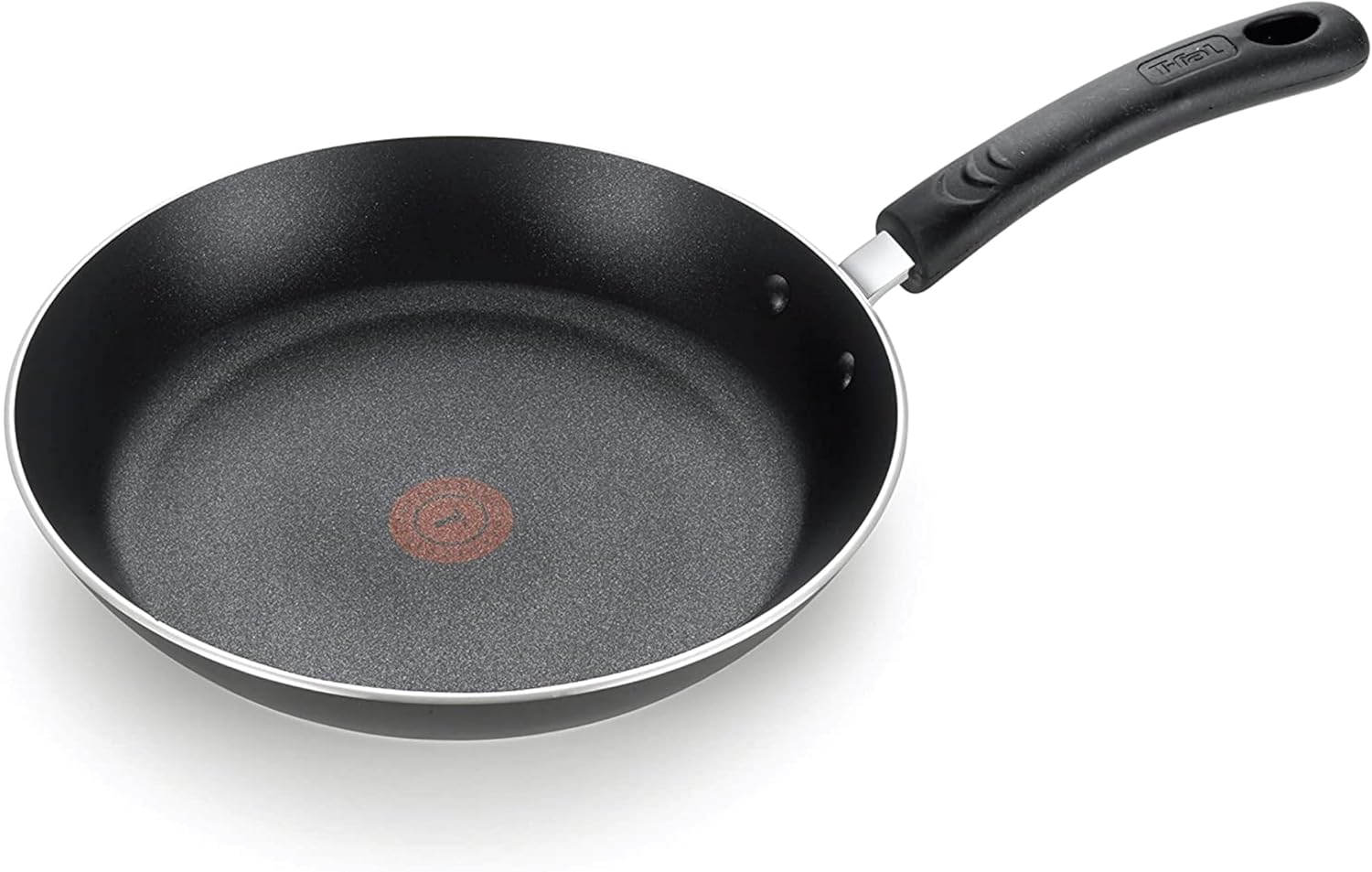
The T-fal Professional is a classic example of traditional nonstick, showcasing the effectiveness of Ceramic vs Nonstick Frying Pans in real-world cooking.
Sometimes, you just need a workhorse. T-fal essentially invented the nonstick category, and their Professional line is the gold standard for budget-friendly, high-performance cooking.
-
Size: 12.5 Inch
-
Material: Hard Anodized Aluminum with Titanium Advanced Nonstick (PTFE).
-
Purchase: Check Current Price on Amazon
The Cookware Scout Review: The T-fal Professional isn’t going to win any beauty contests, but it belongs in almost every kitchen. The Titanium-reinforced PTFE coating is remarkably resilient. I love the patented Thermo-Spot indicator in the center—the red pattern turns solid when the pan is perfectly preheated, taking the guesswork out of cooking. The hard-anodized aluminum body prevents warping, even if you accidentally run it under cold water while it’s still warm (though please, don’t make a habit of that).
Based on Buyer Reviews:
-
Top 3 Pros:
-
Unbeatable Slickness: Buyers are thrilled with the flawless food release; eggs, pancakes, and delicate fish slide around with zero effort.
-
Thermo-Spot Indicator: Home cooks highly value the visual cue that lets them know exactly when the pan is ready for the food.
-
Incredible Value: Thousands of reviews point out that this pan performs just as well as pans that cost triple the price.
-
-
Top 3 Cons:
-
Center Domed Shape: Some users report that the center of the pan is slightly raised, causing oils to pool around the outer edges.
-
Aesthetic Appeal: It looks like a standard, utilitarian restaurant pan; it’s not something you’ll leave out on the stove for decoration.
-
Coating Still Vulnerable: Despite the “titanium” marketing, buyers note that metal utensils will still scratch the PTFE layer over time.
-
The Premium Hybrid Pick: GreenPan Valencia Pro Hard Anodized Ceramic
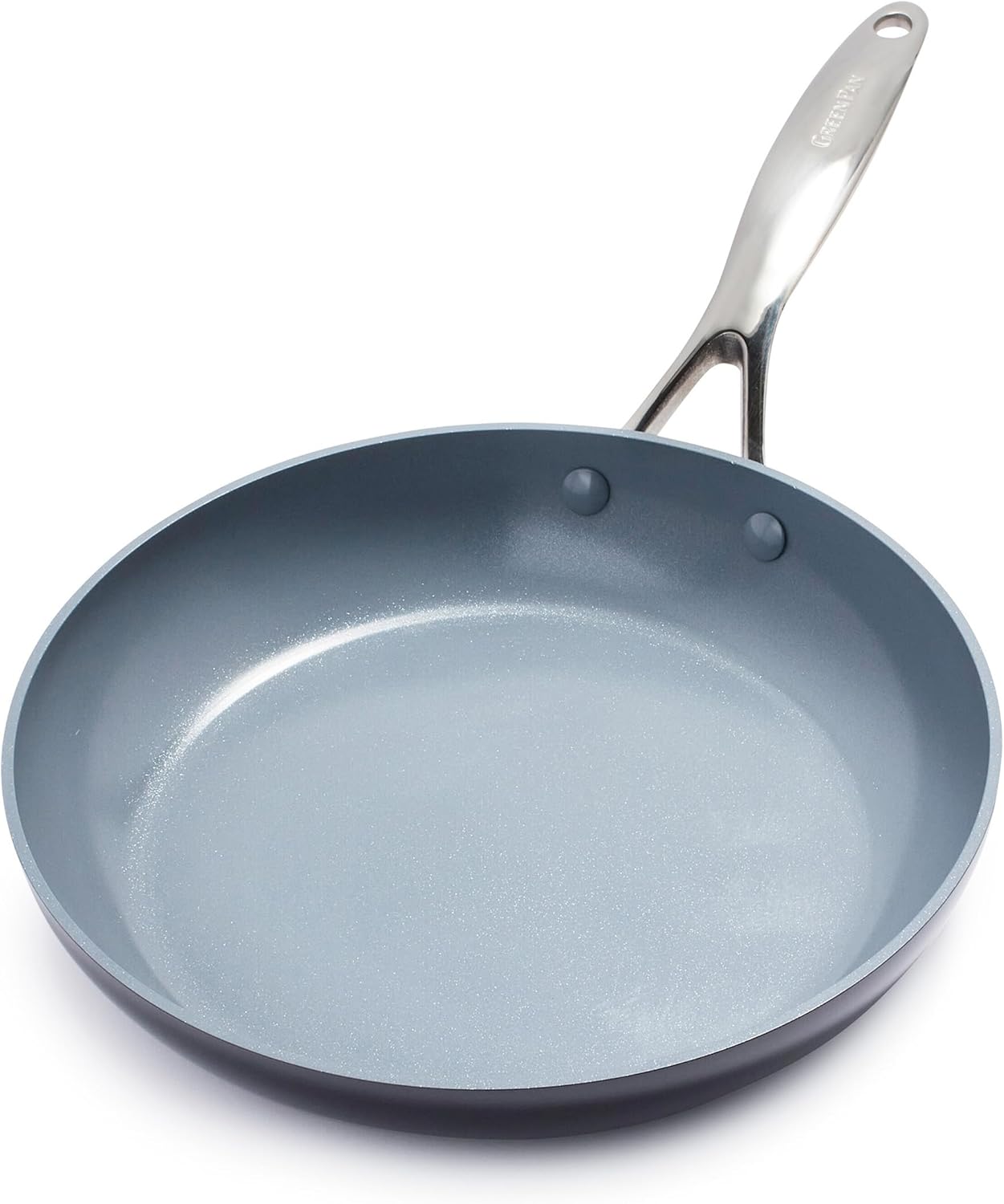
For those who prioritize health, the GreenPan Valencia Pro highlights why many opt for ceramic in the Ceramic vs Nonstick Frying Pans debate.
If you want the safety of ceramic but the ruggedness of hard-anodized aluminum, the GreenPan Valencia Pro bridges the gap beautifully.
-
Size: 11 Inch
-
Material: Hard Anodized Aluminum with Thermolon Minerals Pro Ceramic Nonstick.
-
Purchase: Check Current Price on Amazon
The Cookware Scout Review: GreenPan is the pioneer of ceramic cookware. The Valencia Pro utilizes their proprietary Thermolon coating infused with diamonds for extra resilience. What sets this apart is the Magneto base, which makes it fully induction-compatible while ensuring it sits perfectly flat on glass stoves. It is marketed as “metal utensil safe,” and while I still highly recommend sticking to silicone or wood to extend its life, it certainly holds up better against accidental scrapes than cheaper ceramic alternatives.
As you weigh your options, remember the key differences in performance between Ceramic vs Nonstick Frying Pans and how they align with your cooking style.
Based on Buyer Reviews:
-
Top 3 Pros:
-
Induction Compatibility: Buyers with induction stovetops praise how quickly and evenly this pan heats up.
-
Sturdy Construction: The hard-anodized exterior is incredibly tough, resisting dents and dings much better than standard aluminum.
-
Toxin-Free Peace of Mind: Users love the eco-friendly, PFAS-free coating paired with professional-grade build quality.
-
-
Top 3 Cons:
-
Requires Maintenance: Buyers quickly point out that you must cook on lower heat and use a small amount of fat; otherwise, protein will stick.
-
Edge Chipping: A few reviews noted that the ceramic coating around the very rim of the pan can chip if you bang utensils against it.
When it comes to maintenance, understanding how to care for your Ceramic vs Nonstick Frying Pans can extend their lifespan significantly.
-
Price Tag: It is a premium pan, and some buyers feel frustrated having to replace a pan at this price point every few years when the coating eventually fades.
-
Who is This Product For?
Cookware is never one-size-fits-all. Your choice between ceramic and traditional nonstick should come down to your daily cooking habits and your personal priorities.
You should buy a Ceramic Frying Pan if:
-
You are deeply health-conscious: If you want zero risk of off-gassing and want your kitchen 100% free of PFAS, PTFE, and heavy metals.
-
You prioritize eco-friendly manufacturing: The process of creating sol-gel ceramic coatings produces significantly fewer carbon emissions than traditional PTFE manufacturing.
-
You love kitchen aesthetics: Ceramic pans (like the Caraway) come in gorgeous, Instagram-worthy colors that look beautiful sitting on open shelving.
You should buy a Traditional Nonstick (PTFE) Frying Pan if:
-
You are a pragmatic, everyday cook: If you just want to get breakfast on the table quickly without worrying about food sticking.
-
You cook with zero fat: If you are on a strict diet and want to dry-fry eggs or chicken breasts, PTFE is the only coating slick enough to handle it reliably.
-
You want maximum longevity for your dollar: While neither lasts forever, traditional nonstick generally gives you a slightly longer runway of perfect slickness before needing replacement.
How to Extend the Life of ANY Nonstick Pan
Whether you choose ceramic or traditional PTFE, nonstick pans are essentially consumable items. They will not outlive you. However, you can double their lifespan by following the “Cookware Scout Golden Rules”:
-
Ditch the Aerosol Sprays: Never use Pam or other aerosol cooking sprays. They contain emulsifiers (like soy lecithin) that cook onto the nonstick surface and carbonize, creating an invisible, sticky barrier that will ruin your pan. Use regular liquid oil or butter instead.
-
No Metal Utensils: I don’t care what the box says. “Metal utensil safe” usually means it won’t instantly destroy the pan, but it will degrade it over time. Stick to silicone, wood, or nylon spatulas.
-
Low to Medium Heat Only: High heat is the enemy of nonstick coatings. It breaks down PTFE and degrades ceramic. Use your stainless steel or cast iron skillets for searing steaks; keep your nonstick for eggs, fish, and delicate sautéing.
-
Never Shock the Pan: Do not take a hot pan off the stove and immediately throw it into the sink under cold water. This causes thermal shock, which will warp the metal base and cause the coating to flake off. Let it cool completely first.
-
Hand Wash Only: Dishwasher detergents are highly abrasive. A good nonstick pan takes 15 seconds to wash by hand with warm soapy water and a soft sponge. Skip the dishwasher.
The Final Verdict
Ultimately, the choice between Ceramic vs Nonstick Frying Pans is a personal one, influenced by your cooking habits and health considerations.
So, in the ultimate battle of Ceramic vs. Nonstick frying pans, who takes the crown?
If you are looking for the absolute pinnacle of slickness and food release, and you want a reliable workhorse that won’t break the bank, Traditional Nonstick (like the T-fal Professional) is still the reigning champion. It is the most forgiving material for the average home cook.
However, the industry is shifting, and the technology behind ceramic is getting better every year. If environmental impact, avoiding synthetic chemicals, and modern aesthetics are at the top of your list, a premium Ceramic pan (like the Caraway or GreenPan) is a brilliant investment. Just be prepared to baby it a bit more, and keep the heat turned down.
In conclusion, as you evaluate the merits of each option, the decision between Ceramic vs Nonstick Frying Pans will ultimately enrich your cooking experience.
Whichever side of the aisle you land on, treating the pan right is the secret to making it last. Equip your kitchen smartly, follow the golden rules, and say goodbye to scrubbing burnt eggs forever.
Whether you prefer the charm of ceramic or the reliability of traditional nonstick, knowing the ins and outs of Ceramic vs Nonstick Frying Pans will guide your choice.
Pingback: Best Nonstick Frying Pan Under $50: Budget-Friendly Picks
Pingback: 5 Fascinating Benefits of All-Clad vs Cuisinart Frying Pans