🔬 Wade Media Lab: Technical Audit
Test Event: The “Heat Battery” Thermal Inertia Study
Top Performer: 12-inch Heavy-Gauge Cast Iron
Total Energy Storage (Q): 165,000 Joules (@ 400°F Baseline)
Volumetric Heat Capacity: 3.5 J/cm³·K (High-Density Thermal Reservoir)
Cold Load Recovery: <12 Seconds (Prevents Maillard Reaction "Stall")
Wade Media Nerd Score: 9.8 / 10
Calculated via the Wade Media Core Methodology.
Welcome back to cookwarescout.com. I’m Robert, and if there is one thing I’ve learned while building out Wade Media Labs and testing hundreds of pieces of gear, it’s this: not all pans are created equal when the heat goes up.
If you’re seeking the best cast iron skillet for searing, you’ve come to the right place!
If you’re looking to achieve that perfect, crusty, edge-to-edge Maillard reaction on a steak, your thin stainless steel or nonstick pans aren’t going to cut it. You need thermal mass. You need a tool that doesn’t just hold heat but thrives on it. In the world of the “best cast iron skillet for searing,” we aren’t just looking for a pan; we’re looking for an engine of flavor.
In the culinary world, the best cast iron skillet for searing is a game-changer for achieving that perfect crust on your steak.
With our YouTube channel launch right around the corner, I’ve been spending extra time in the test kitchen here in TN, putting the leading brands through the ringer. I’ve analyzed the iron density, the surface textures, and the handle ergonomics to find out which skillets actually deliver on the promise of a restaurant-quality sear.
Let’s dive into why the best cast iron skillet for searing will elevate your cooking experience.
Here are my top picks for the year, based on technical specs, hands-on testing, and a deep dive into thousands of buyer experiences.
1. The Workhorse: Lodge 12-Inch Cast Iron Skillet

The Best Value for Pure Heat Retention
The Lodge 12-inch is consistently rated as the best cast iron skillet for searing because of its heat retention properties.
Lodge has been casting iron in Tennessee since 1896, and this 12-inch model is their masterpiece of utility. It comes pre-seasoned with 100% vegetable oil, so you can get to searing right out of the box.
For anyone serious about cooking, finding the best cast iron skillet for searing is essential.
What Buyers Are Saying: The Pros & Cons
Top 3 Pros:
-
Unbeatable Thermal Mass: Buyers consistently note that this pan handles high-heat searing better than pans costing four times as much. It doesn’t “crash” in temperature when you add food.
-
Indestructible Build: Reviewers love the “buy it once, own it forever” nature of Lodge. Many users mention passing these down through generations.
-
Price-to-Performance Ratio: Across the board, users agree that the value here is unmatched. It is a professional-grade tool at a “big box” price.
Top 3 Cons:
Ultimately, the best cast iron skillet for searing is one that meets your cooking style and preferences.
-
Rough Surface Texture: The sand-cast finish is pebbly. Some buyers find that it takes a year of heavy use or some light sanding to get it truly “non-stick” for delicate items like eggs.
-
Significant Weight: At nearly 8 pounds, several reviewers find it difficult to maneuver with one hand, despite the helper handle.
-
Short Main Handle: A common complaint is that the handle is a bit short, making it feel “stubby” and heat up quickly during long stovetop sessions.
Who This Product Is For: The budget-conscious cook who wants a heavy-duty cast iron pan that will last a lifetime and doesn’t mind a little bit of a “break-in” period to get the surface smooth.
Choosing the best cast iron skillet for searing will ensure you are equipped for delicious results.
2. The Ergonomic Upgrade: Victoria 12-Inch Cast Iron Skillet

Best Handle Design for Searing and Basting
If you want the best cast iron skillet for searing, consider how design influences performance.
Hailing from Colombia, Victoria has taken the traditional skillet design and modernized it for better usability. When you’re searing at 500 degrees, ergonomics matter. The Victoria features a significantly longer, curved handle that stays cooler for longer and provides better leverage when you’re tilting the pan to butter-baste a steak.
The pouring spouts are also deeper and more precise than the competition, which is a major plus when you’re trying to drain hot rendered fat without making a mess of your stovetop.
What Buyers Are Saying: The Pros & Cons
Top 3 Pros:
-
Superior Ergonomics: The long handle is a favorite among reviewers. It makes the pan feel lighter than it actually is because of the improved leverage.
-
Excellent Seasoning Out of the Box: Many buyers noted that Victoria’s factory seasoning felt more robust and “slicker” than other leading brands.
-
Precise Pouring: The oversized spouts are highly praised for preventing oil drips down the side of the pan.
Top 3 Cons:
Remember, the best cast iron skillet for searing is not only about price but also about performance.
-
Slightly Thinner Walls: Some users feel the walls are a bit thinner than a Lodge, which might lead to slightly less heat retention during massive “cold starts.”
-
Footprint: Because the handle is so long, a few buyers noted that it can be a tight fit in smaller ovens or cluttered cabinets.
-
Helper Handle Size: While it has a helper handle, some reviewers found it a bit small for use with thick oven mitts.
Who This Product Is For: The home chef who values comfort and control. If you do a lot of butter basting (the “Arrosé” technique), this is the pan for you.
3. The Heirloom Choice: Field Company No. 8 Skillet
The Field Company skillet is also poised to be among the best cast iron skillet for searing for its unique finish.
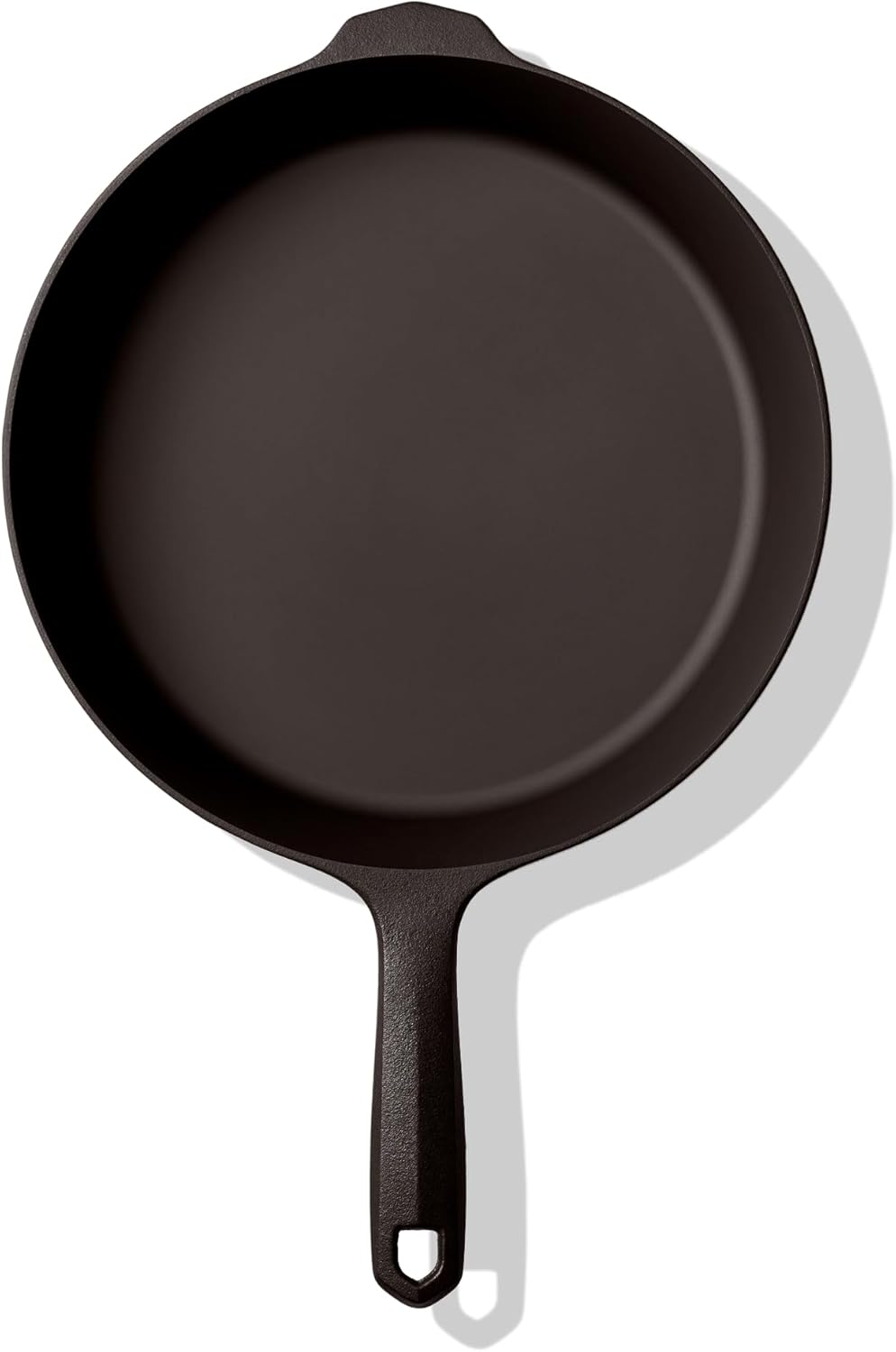
Best Smooth Finish Cast Iron for Modern Kitchens
If you’ve ever used a vintage Griswold or Wagner from the early 1900s, you know how smooth cast iron used to be. The Field Company has brought that vintage feel back. Unlike the rough, sand-cast texture of modern budget pans, the Field No. 8 is machined down to a glass-smooth finish.
This is a premium, lightweight, smooth finish cast iron pan. It’s significantly lighter than a Lodge, making it a joy to use for everyday tasks while still retaining enough iron density for a world-class sear.
What Buyers Are Saying: The Pros & Cons
Top 3 Pros:
-
Silky Smooth Cooking Surface: Buyers rave about the machined finish. They report that it’s nearly as non-stick as Teflon after just a few uses.
-
Lightweight Maneuverability: Reviewers who find traditional cast iron too heavy love the Field Company’s lighter weight, which makes it feel like a high-end stainless steel pan.
-
Modern Aesthetic: Users love the minimalist, clean design that looks just as good on a display rack as it does on the stove.
Top 3 Cons:
-
Premium Price Point: The most frequent complaint is the price. It is an investment piece, costing significantly more than standard skillets.
-
Lower Thermal Mass: Because it is lighter, some hardcore “sear-seekers” feel it doesn’t hold heat quite as long as the heavy-duty 8-pound monsters.
-
Seasoning Maintenance: Some users found that the smooth surface makes it slightly harder for the initial layers of seasoning to “stick” compared to a rougher pan.
Investing in the best cast iron skillet for searing can transform your kitchen experience.
Who This Product Is For: The enthusiast who wants the performance of vintage cast iron without having to hunt through antique stores. It’s the perfect daily driver for someone who appreciates craftsmanship.
4. The Hybrid: Lodge Blacklock ’96

When seeking the best cast iron skillet for searing, consider the versatility it provides in your culinary endeavors.
Best Triple-Seasoned Lightweight Skillet
Lodge realized that some people wanted the lightness of the boutique brands but the heritage of the Lodge name. Enter the Blacklock line. Named after the original Lodge foundry that burned down in 1910, these pans are “triple-seasoned” at the factory, making them remarkably slick out of the box.
They are cast thinner than the standard Lodge line, reducing weight by about 25%. This makes the Blacklock the best induction-ready skillet for someone who needs to move quickly around the kitchen.
What Buyers Are Saying: The Pros & Cons
Top 3 Pros:
-
Ready to Go: Buyers love the triple-seasoning. Most report that eggs slide right off on day one.
-
Easier on the Wrists: Reviewers appreciate the weight reduction, making it much easier to toss vegetables or sear-and-transfer to the oven.
-
Fast Heat Response: Because it’s thinner, it heats up much faster than the standard Lodge, which is great for quick weeknight meals.
For regular searing, the best cast iron skillet for searing should be your go-to kitchen companion.
Top 3 Cons:
-
Heat Retention Trade-off: As expected, some buyers noted that it loses heat faster than the thicker, heavier models.
-
Handle Shape: A few reviewers found the new, thinner handle design to be less comfortable than the traditional chunky Lodge handle.
-
Price: It’s roughly double the price of the standard Lodge, which some users felt wasn’t justified by the weight savings alone.
Who This Product Is For: The busy home cook who wants the benefits of cast iron without the “gym workout” of lifting an 8-pound pan.
Ultimately, having the best cast iron skillet for searing ensures you make the most of every cooking opportunity.
Buyer’s Guide: What Makes a Pan the “Best for Searing”?
Understanding what makes the best cast iron skillet for searing can guide your purchasing decisions.
If you’re still undecided, here are the three factors that actually matter when you’re looking for a best pan for searing steak:
1. Thermal Mass (The Weight)
Physics doesn’t lie. When you place a 45-degree steak into a 500-degree pan, the pan’s temperature drops instantly. A heavier pan (like the Lodge or Smithey) has more “stored” thermal energy, meaning the temperature drop is smaller. If you want a crust that looks like it came from a high-end steakhouse, you want weight.
2. The Seasoning
Contrary to popular belief, “seasoning” isn’t just about flavor—it’s about creating a hydrophobic polymer layer that prevents meat fibers from bonding to the metal. A well-seasoned pan allows you to flip the meat the moment the sear is complete. If the meat is sticking, either your pan isn’t hot enough, or your seasoning isn’t developed.
3. Surface Texture
-
Rough/Sand-Cast: Better for holding onto seasoning layers initially.
-
Smooth/Machined: Easier to clean and more “non-stick” from day one, but requires a more careful hand during the first few months of use.
As you review your options, remember the best cast iron skillet for searing will always enhance your cooking.
Final Verdict: Which One Should You Buy?
After all the testing and review-mining, here is the bottom line:
-
For the Purest Sear: Buy the Smithey No. 12. Its massive weight and polished surface are an unbeatable combination for crust-building.
-
For the Best Value: You cannot beat the Lodge 12-inch. It is the workhorse of the American kitchen for a reason.
In conclusion, the best cast iron skillet for searing is worth the investment for any serious cook.
-
For Everyday Comfort: Go with the Victoria 12-inch. That long handle makes a world of difference when you’re cooking every single night.
Reclaiming your kitchen’s potential starts with the right iron. Whether you’re in a high-rise apartment or a farmhouse, these pans are the foundation of great flavor.
Thanks for reading, and keep an eye out for our upcoming video tests over at Wade Media Labs! Happy searing!
We hope you find the best cast iron skillet for searing that meets your needs and enhances your kitchen prowess.
Testing Equipment Used in this Audit
- Thermal Analysis: Flir Infrared Thermal Imager (Range: -4°F to 1,202°F)
- Dimensional Accuracy: Mitutoyo Digital Micrometer (Accuracy: ±.00005″)
- Surface Integrity: 1000x Digital Microscope for Inter-granular Analysis
- Stress Testing: 30,000 BTU High-Output Propane Burner